Your whole field of vision should be clear when looking straight ahead without moving your head. Peripheral vision problems, such as dim or blurry peripheral vision, mean that you don't have a normal, wide-angle field of vision, even though your central vision may be fine. If you are experiencing blurry peripheral vision, there are a few eye conditions that could be causing it, including optic neuritis, glaucoma and retinal detachment.
Signs of blurry peripheral vision
Peripheral vision allows you to see surrounding objects without moving your head or eyes. It is particularly important for seeing at night and for low-light vision. Left untreated, blurry peripheral vision can lead to tunnel vision — the sensation of seeing through a narrow tube — and, potentially, vision loss. Some common symptoms of blurry peripheral vision may include:
- Tripping over obstacles more frequently while walking
- Difficulty performing usual tasks in low-light situations
- Difficulty driving at night
Causes of blurry peripheral vision
Until blurry peripheral vision affects your daily life, you might not notice it. With conditions like optic neuritis and glaucoma, the loss of peripheral vision can be sudden or more gradual, depending on the person. Sudden peripheral vision blurriness may also be the result of a detached retina, which is a medical emergency that must be treated immediately.
SEE RELATED: Blurred vision and headaches
Optic neuritis
The optic nerve connects the eye and the brain and sends visual information from the retina. Optic neuritis can occur if the immune system attacks the fatty coating, called myelin, that protects the optic nerve. When the myelin is damaged, the optic nerve sends mixed messages to the brain, causing changes in vision. This condition can happen to anyone, though it usually occurs in adults younger than 45 years old; women are more commonly affected than men. Optic neuritis can be detected by your eye doctor, so yearly exams are important.
Symptoms
- Vision loss in one eye that can last between seven and 10 days
- Vision loss in the central or peripheral field of vision
- Sudden reduction in visual acuity
- Pain around the eye that worsens with sideways eye movement
- Flashing lights
- Loss of color vision (or colors appear less saturated)
- Changes in the way the pupil reacts to bright light
- Dilated pupils (instead of pupils constricting) in response to light
SEE RELATED: What Is hemianopsia?
Retinal detachment
Another possible cause of blurry peripheral vision is retinal detachment (also called a detached retina), which occurs when the retina detaches from the back of the eye. As stated earlier, this is a serious medical emergency; if not diagnosed and treated immediately, it can potentially lead to permanent vision loss and possible blindness.
Symptoms
- Sudden blurred vision
- An increase in eye floaters
- Flashes of light
- Vision loss, as if a dark curtain is blocking some of your field of view
- Sluggish pupil reflex to light
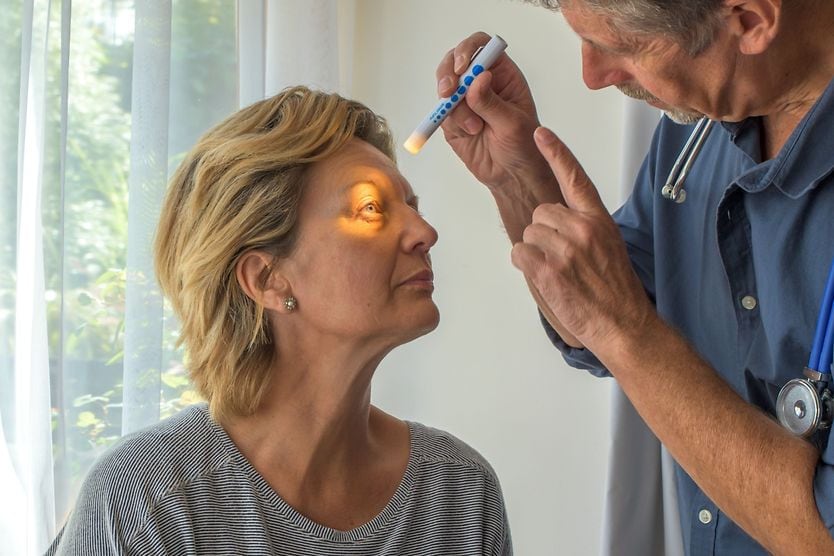
During an eye exam, an eye doctor will dilate your pupils and check your retinas for any signs of detachment. Special imaging tests are also available that provide a complete, wide-angle view of the retina in both eyes.
Glaucoma
Glaucoma is damage to the optic nerve that is related to elevated pressure inside the eye. If left untreated, it can lead to permanent vision loss. Most people don’t notice glaucoma at first because many types of the condition are painless and take a long time to progress. Symptoms vary depending on the type and severity of glaucoma. Annual eye exams are the most effective way to detect glaucoma before there is noticeable vision loss.
Symptoms
- Blurred vision
- Blurry peripheral vision, with central vision remaining clear and intact (the far peripheral vision is often affected first)
- Cloudy eyes
- Blind spots in your eyes
- Eye pain
- Headaches
- Eye redness
- Nausea and vomiting
In addition to these eye conditions, other causes of peripheral blurry vision can include drug or alcohol abuse, nerve compression, and brain damage from disease, stroke or head injuries. At the first sign of blurry vision, schedule an eye exam.
READ MORE : Blurry vision and COVID-19