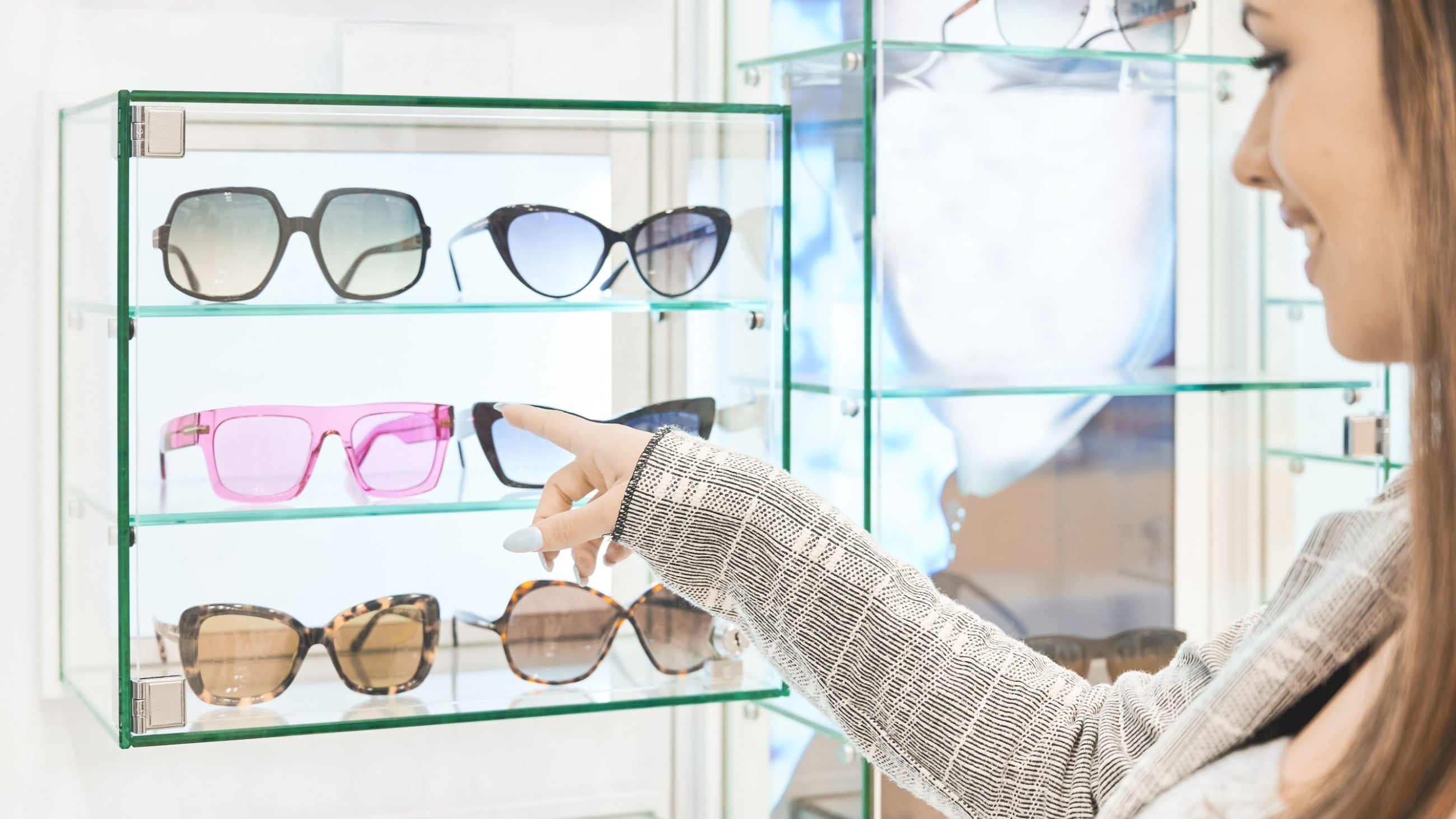
If you’re in the market for a new pair of sunglasses, you’ve probably realized that there are plenty of lens options available — namely, glass and plastic. But do glass or plastic lenses make more sense for sunglasses?
Glass lenses are a classic choice and provide optimal clarity. But they can be heavy, especially if you’ve got a prescription. Plus, due to their relatively fragile nature, glass lenses may not be the ideal choice for kids.
Plastic lenses tend to be a popular option, especially when it comes to plano (non-prescription) sunglass lenses, but there are variations in quality which should be a consideration.
Before you make a sunglasses decision, take a look at the benefits and limitations of both glass and plastic lenses. When it’s time to select a new pair of shades, it will be much easier to make the ideal choice.
SEE RELATED: Your guide to prescription sunglasses
Sunglass lens replacement: Glass lenses
Glass lenses may not be as common as they once were, but they still offer exceptional optics, plus they are usually more durable and less prone to distortion. With longer-lasting clarity than other lens materials, glass lenses are an option for those who rely on their sunglasses all day or must perform detailed work outdoors.
Because glass lenses are prone to crack and shatter, they are typically not a good option for children, teens or sports activities. On the other hand, glass lenses are great for adults with stronger prescriptions.
Although glass-lens sunglasses remain a choice, they’re also heavier than plastic lenses and can limit your selection of frames. For example, glass lenses would not be an ideal fit for semi-rimless or rimless frames.
WEIGHING YOUR SUNGLASSES OPTIONS? Shop for sunglasses at an optical store near you or an online eyewear retailer.
Sunglass lens replacement: Plastic lenses
The first plastic eyeglass lenses were introduced in 1947. While there have been numerous advances in eyeglasses since then, CR-39 plastic is still known for its optical quality, durability and low cost.
A primary benefit of plastic lenses is how easily they allow for lens treatments like tinting and UV protection. Plastic lenses can also be coated to protect against scratches, but keep in mind that neither glass nor scratch-resistant plastic lenses are 100% scratch-proof.
Plastic lenses also perform well in terms of safety and durability. These lenses usually pose a low risk of injury, making them suited for children, teens and active adults.
Plastic is often less expensive and lighter weight than glass, which is why many non-prescription sunglasses and clip-on sunglass lenses are made of this inexpensive-yet-durable material.
The ideal lenses for sunglasses
Both glass and plastic lenses have their benefits, but which is ideal for your next pair of sunglasses?
Many sunglasses are available in both glass and plastic lens options, but an important factor is to ensure your lenses effectively block UV rays.
According to experts, sunglasses should meet the following criteria to keep your eyes protected:
- Block 99% to 100% of both UVA and UVB radiation.
- Screen out 75% to 90% of visible light.
- Be well matched in color and absorption and free of distortion and imperfection.
Glass vs. plastic lenses: a quick comparison
Here is a brief comparison of glass vs. plastic lenses to help you decide which option is best for you:
- WEIGHT: Plastic is about half the weight of glass, so plastic lenses are a more comfortable choice for long-term wear.
- COST: Plastic lenses are generally less expensive than glass.
- OPTICAL CLARITY: Glass has more optical clarity than plastic and offers little to no distortion.
- UV PROTECTION: Regular plastic eyeglass lenses block most UV light, but adding a UV-blocking dye boosts UV protection to 100 percent for added safety.
- LONGEVITY: Due to its construction, glass is more durable than plastic.
- IMPACT RESISTANCE: Glass is prone to shattering and splintering, making plastic a safer choice, especially for children’s eyewear.
- AVAILABILITY: Glass and plastic lenses are both readily available, but plastic lenses will fit more frame options.
- SUNGLASS TINT VERSATILITY: Plastic lenses are offered in a wider variety of colors and designs than glass lenses. Plastic also tends to be a better choice for sunglasses due to the coating and color options.
The sunglasses lenses that are appropriate for you
Glass lenses tend to be limiting in terms of frame options and tinting capabilities. Your need for prescription vs. non-prescription sunglasses may also affect your decision.
If you’re in the market for new prescription sunglasses, or replacement sunglass lenses, consider a recommendation from your eye doctor on glass vs. plastic sunglass lenses.
QUESTIONS ABOUT PRESCRIPTION SUNGLASSES? Schedule an appointment with an eye doctor near you.