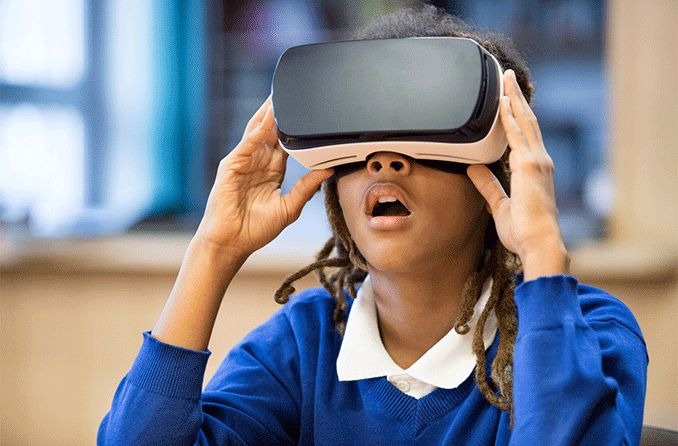
An estimated 52.1 million Americans have used virtual reality (VR) headsets to immerse themselves in digital experiences. Unfortunately, VR is not all fun and games. Researchers say VR headsets may cause eye problems, although there’s no evidence of long-term damage.
“Virtual reality is constantly advancing and new technologies and applications [are] regularly emerging,” the Canadian Association of Optometrists (CAO) advises. “For now, the best advice is to pay attention to warnings that come with VR headsets, limit time spent in the virtual world, and ensure all users have regular comprehensive eye examinations with an optometrist to ensure eye health and contribute to overall health.” Virtual reality enthusiasts can also talk to their optometrists about VR prescription lenses. For players who already wear corrective glasses, these prescription inserts can be fit into their headsets.
Effects of VR on your eyes
Research shows wearing VR headsets can cause eye strain, eye discomfort, eye fatigue and blurred vision.
The American Academy of Ophthalmology (AAO) explains that staring for too long at a VR screen can lead to eye strain or fatigue. Why? Because you tend to blink less when using a device with a digital screen than you normally do, leading to eye strain or fatigue. Furthermore, a published study suggests that eye fatigue among users of VR headsets results from the discrepancy between virtual and perceived depth.

Image: Kara Perricone
Another eye-related issue associated with VR headsets is visually induced motion sickness. Aside from eye strain and eye fatigue, symptoms of this so-called “cybersickness” include trouble focusing, headache, lightheadedness, drowsiness, sweating, nausea and vomiting.
Visually induced motion sickness “remains an obstacle to the widespread adoption and commercial development of technologies associated with [VR headsets],” according to a research analysis.
The analysis notes that children, women, and people with unstable posture, defects in their field of vision or a history of motion sickness may be especially susceptible to cybersickness.
SEE RELATED: Can video games cause health problems?
Can a VR headset damage your vision?
Manufacturers warn that children under 13 should not use VR headsets because of the nature of some VR content and because the size of the headset is not intended for children. But a study found that young children tolerate “fully immersive” VR games without “noteworthy effects” on the coordination between visual perception and physical movement. Likewise, a different study showed no serious deterioration of vision among children 8 to 12 who played a VR video game for 20 minutes. But two study participants had trouble detecting differences in distance.
Vision benefits from VR
While VR headsets may cause concerns about potential harm to our vision, they also can help people enhance their vision.
Under the guidance of an eye care professional, a VR headset can be used to improve eye coordination, hand-eye coordination, depth perception and reaction time. In addition, proper use of a VR headset can produce sharper visual acuity for someone with lazy eye (amblyopia).
Additionally, VR headsets might assist people with low vision regain some level of their sight.
When should I see an eye doctor?
If you notice changes in your vision (for example, your vision becomes blurred) or you feel eye discomfort or eye pain while using a VR headset, stop using the headset and call your eye doctor. Your doctor will perform a comprehensive eye exam to determine if you have any vision problems that require treatment.
SEE RELATED: Eye Tracking Technology