What is Myopia Awareness Week?
Once a year, Myopia Awareness Week is a chance for parents around the world to learn about the growing threat of myopia — the medical word for nearsightedness or short-sightedness.
The event was created in 2018 by a team of eye doctors and researchers. It's now a global effort to teach parents about myopia and can help them take action.
The United States will celebrate Myopia Awareness Week 2026 from November 14-20.
Why myopia awareness is so important
The number of people with myopia is on the rise around the world.
By 2050, researchers believe that nearly half the world's population — more than 5 billion people at that time — will have myopia.
Prescription eyeglasses and contact lenses can help nearsighted kids and teenagers see clearly. But the impact of myopia doesn't always end there.
What is myopia?
Myopia, or nearsightedness, is an eye condition that makes distant objects look fuzzy or out of focus. It's a common type of refractive error — an imperfection in the eye's shape that causes blurry vision.
Myopia happens when the eye itself is elongated, or because the shape of the cornea (the clear window in the front of the eye) or the lens (a disc-shaped object inside the eye) isn't quite right.
Outside light should focus directly on the retina, but myopia causes light to focus in front of the retina instead. This is why distant objects look blurrier than closer ones.
The symptoms of myopia may not be obvious in kids, and they may not realize they’re experiencing anything out of the ordinary. A child with myopia or another vision issue may:
- Squint a lot
- Rub their eyes often
- Have trouble reading objects on whiteboards, signs or other distant objects
- Hold things close to their eyes to see
- Have a short attention span
- Get tired after focusing for a while
- Struggle in school
- Get headaches (less common)
If you notice your child exhibiting one or more of these behaviors, schedule an eye exam so an eye doctor can check their vision and eye health.
Parent Checklist: Can you spot the signs and symptoms of a vision problem in your child?
Myopia gets worse over time
What many parents may not know is that myopia is often progressive, meaning it can get worse with age.
Many kids with myopia develop symptoms between the ages of 8 and 13. In the years that follow, their myopia can worsen as their eyes grow and develop. However, many myopia prescriptions stabilize between the ages of 15 and 20.
This increase in nearsightedness during childhood and adolescence — called myopia progression — is what parents can help limit.
Myopia can lead to serious eye problems later on
On a vision prescription, a myopia measurement in the Sphere (SPH) column usually looks like a negative number. It shows up as a minus sign followed by a number, a decimal, and then one or two more numbers. For example: -1.25. That number is your lens power, and it’s measured in diopters (D).
The bigger the number after the minus sign, the more severe the myopia — and the higher the risk of developing vision-threatening eye problems later in life could be.
Here are some examples of how a nearsighted person’s risk factors may compare to those of an average person with 20/20 vision:
- -2.00 D (low myopia) – Twice the risk of developing myopic maculopathy. Three times more likely to have a detached retina.
- -4.00 D (moderate myopia) – More than twice as likely to develop glaucoma. Three times the risk of developing posterior subcapsular cataracts.
- -6.00 D (high myopia) – About 21 times as likely to have a retinal detachment. 40 times higher risk of getting myopic maculopathy.
- -8.00 D (high myopia) – 12 times more likely to have posterior subcapsular cataracts. 44 times higher risk of a detached retina. More than 126 times as likely to have myopic maculopathy.
Researchers think that 1 in 10 people will have high myopia by 2050.
Since myopia worsens over time, so can the risk of developing these other eye problems. Practicing healthy eye habits from an early age may be able to help limit some of these risks.
Learn more: Myopia FAQs, videos and other resources
Early diagnosis is essential
The earlier an eye doctor diagnoses myopia, typically the more they may be able to help slow its progression.
Children may not always know what normal eyesight is supposed to look like, so they may not know when something is wrong. Mild myopia symptoms can even go unnoticed in adults.
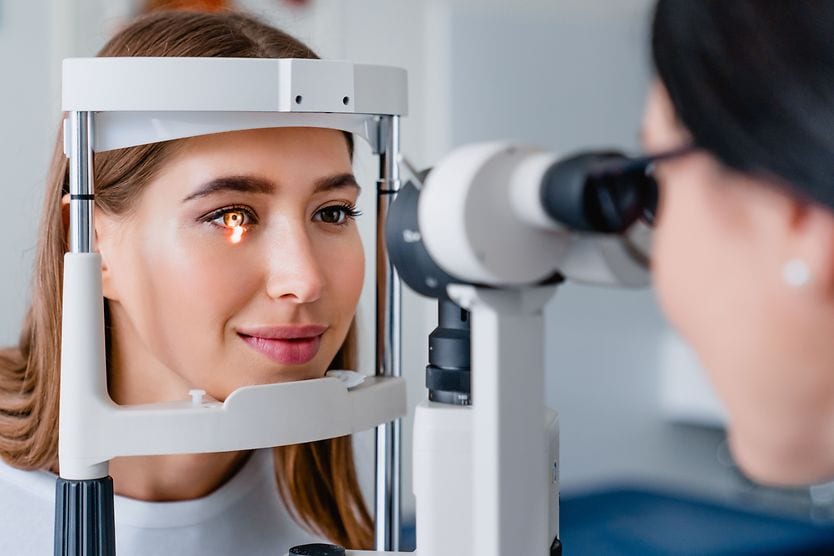
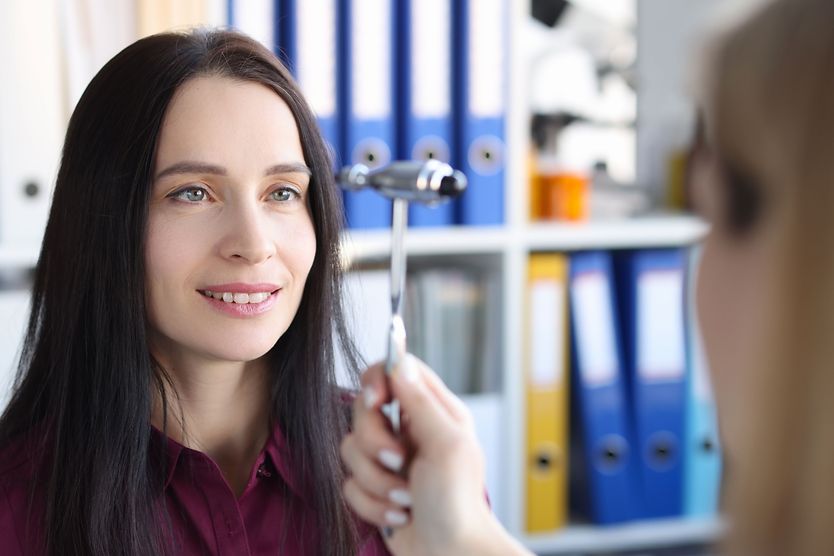
That's why childhood eye exams are important, even when your child isn't showing obvious signs of myopia. A comprehensive eye exam allows an eye doctor to measure a child's vision and check the health of their eyes for anything unusual.
A complete eye exam is different from a vision screening a child might have at school. A vision screening can help determine that your child needs a complete eye exam.
Both tests are important, but screenings are more limited "pre-exams" that often don't check children’s eye health in detail.
Parent printout: 9 questions to ask your child's eye doctor during their eye exam
Management and control
If an eye doctor diagnoses your child with myopia, they'll likely give you a prescription for glasses. Eyeglasses alone can improve their daily life, but they won't stop myopia from getting worse.
Their doctor may recommend taking additional steps to slow the progression of myopia. These steps combined are known as myopia control.
How to slow myopia progression
Certain techniques and treatments could help limit the effects of myopia. Your child’s eye doctor may recommend that they:
Spend more time outdoors
Several studies have shown that a healthy amount of sunlight exposure (even when it's cloudy) can slow myopia progression.
Public health officials in Singapore and Taiwan — which have some of the highest rates of childhood myopia in the world — recommend that kids spend at least 2 hours outside every day.
Reduce screen time
Encouraging your kids to spend less time with digital devices could help lower myopia risks. And you can double the benefit by spending some of that time outdoors instead.
Many doctors recommend that kids aged 2 and older have no more than 1 to 2 hours of screen time each day.
During screen use, practicing the 20-20-20 rule is a way for kids (and adults) to keep their eyes rested and refreshed: Every 20 minutes of screen time, look at something at least 20 feet away while you count to 20.
Place this printable 20-20-20 rule poster near devices as a reminder to take more breaks.
Take medicated eye drops
Your child’s eye doctor might recommend using atropine eye drops every night at bedtime.
Atropine drops are sometimes used to make the pupils open wider during a dilated eye exam. In other cases, a low-dose version may be prescribed for myopia control.
Note: While many studies have looked at and eye doctors have used atropine eye drops over the years, the U.S. Food & Drug Administration (FDA) has not approved it for the indication of myopia control. It is considered off-label use.
Try specialized contact lenses
Eye doctors might recommend special contacts designed to slow the progression of myopia. These are different from the standard contact lenses people usually use to correct their eyesight.
- Peripheral defocus lenses – Daytime lenses that can provide clear vision in the center of the lens and blurry vision along the sides.
- Orthokeratology (ortho-k) lenses – Rigid gas-permeable lenses that can temporarily reshape the cornea overnight for clearer vision the following day.
Myopia control eyeglasses
Myopia control glasses are still an evolving part of myopia management technology. There is one FDA authorized eyeglass product available which can be used for myopia control in the United States.
Progressive lenses and bifocals may also help slow myopia progression, but more research is needed.
Don't wait to schedule your child's eye exam
Myopia Awareness Week is an opportunity to take a closer look at your child's eye health. When a child’s vison problems go undiagnosed and unmanaged, their whole life can be affected. School and activities may be unnecessarily challenging, and they could face increased risk for serious eye problems in the future.
Schedule an eye exam today and talk to your doctor about controlling myopia. The changes you make now could impact your child's eyesight for the rest of their life.
READ NEXT: Myopia in children: Is your child at risk?